
Why and How to Measure Spray Foam Yield and Density
What Spray Foam Contractors Need to Know
If you’ve sprayed long enough, you’ve had that job where the material seemed to disappear faster than it should. Or the one where you thought you were right on thickness… until an inspection told a different story.
That’s where yield and density stop being “technical stuff” and start being business tools.
This isn’t about theory. It’s about protecting your margins and your name. You can do both when you measure spray foam yield and density.
Theoretical Yield vs. What Really Happens on a Job
On paper, every foam system has a theoretical yield. That’s the maximum board feet a set can produce under perfect conditions. It’s calculated like this:
Theoretical Yield (bf) = Set Weight (lb.) × 12 / System Density (lb./ft³)
NCFI Understanding Yields
That number assumes perfect material temperature, perfect substrate, no wind, no waste, no trimming, and no technique issues. In other words, it assumes a world that doesn’t exist.
Then there’s actual yield — what you really get on a job site. And it’s always lower than theoretical because real life gets involved.
The gap between those two numbers? That’s your efficiency. And that’s where your profit lives.
Overspraying: the silent profit killer
We’ve all seen it. You get rolling. The foam looks great. Maybe you’re moving fast. Maybe you’re playing it safe on thickness. And before you know it, you’ve burned through more material than the estimate allowed.
Overspraying costs you in a few ways:
- More material used per job
- Lower yield per set
- More trimming and scrap
- Slower production
That extra half-inch across a 10,000 square foot attic? That’s real money.
The crazy part is most overspray doesn’t come from big mistakes. It comes from little things:
- Gun angle drifting
- Spraying too far off the substrate
- Wind pushing the pattern
- Poor overlap control
- Running pressures too high and creating mist
Every bit of foam that gets trimmed off is material you paid for and didn’t get paid for.
That’s not performance. That’s margin walking out the door.
Underspraying: the reputation risk
Now let’s flip it. If overspraying hurts your wallet, underspraying hurts your name.
When foam comes in thin:
- R-value isn’t what was specified
- Inspections get sticky
- Energy performance suffers
- You risk callbacks
You might save material in the short term. But one failed inspection or one unhappy builder can cost more than a few drums ever will.
The goal isn’t “use less foam.” The goal is apply exactly what you quoted. No more. No less.
Density: Your Early Warning System
Density tells you a lot about what’s happening in your system.
If density is higher than it should be:
- Yield drops
- Expansion is limited
- You’re using more material per board foot
If density is too low:
- Cell structure can weaken
- Shrinkage or cracking can happen
Efficiency for most systems typically falls somewhere around 65–75% for open cell and 70–80% for closed cell. If you track jobs and suddenly see efficiency drop off, something changed. It could be temperature. It could be pressure. It could be technique. But it won’t fix itself. Measuring gives you a heads-up before the problem gets expensive.
How To Measure Spray Foam Density
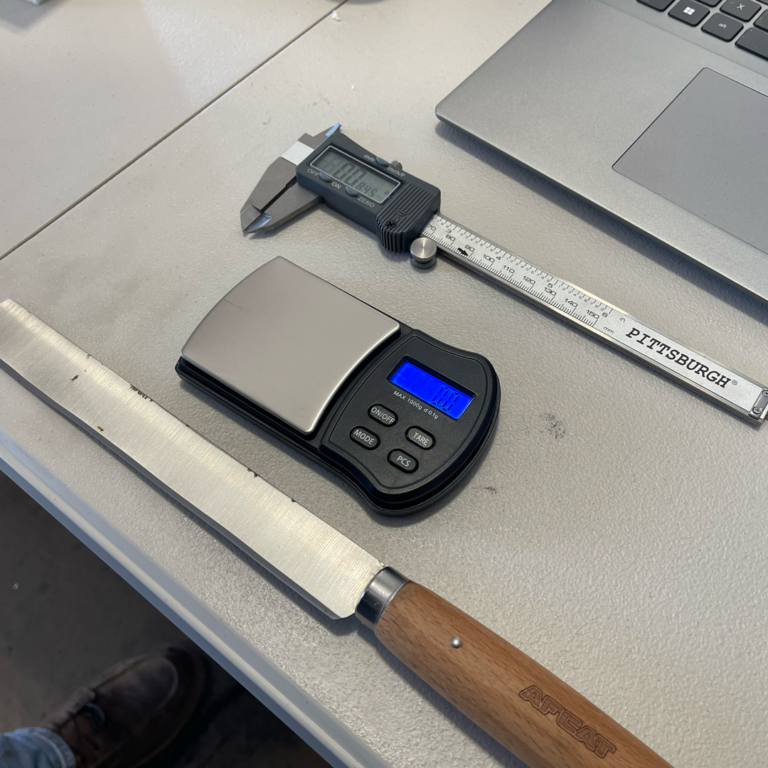
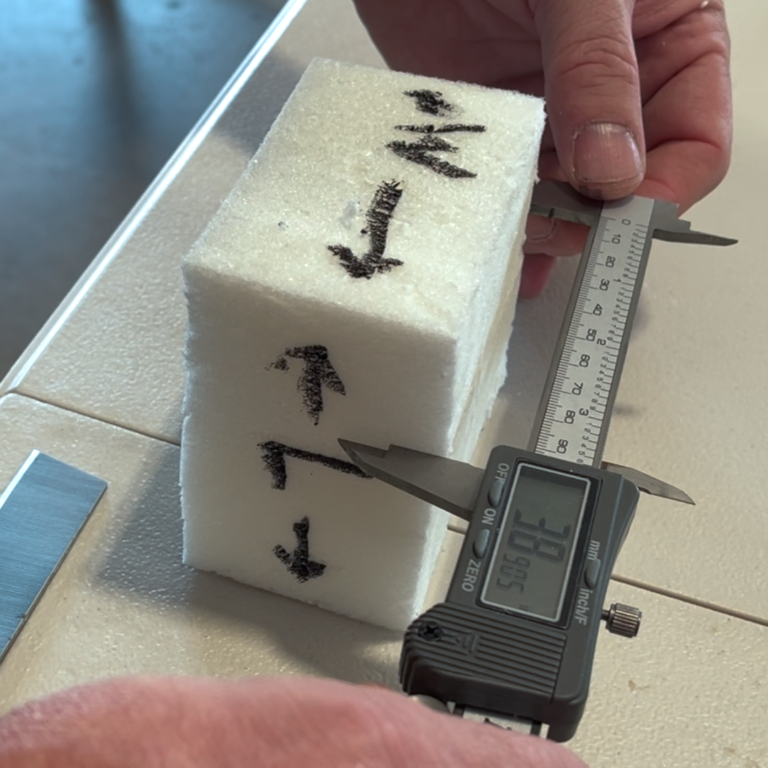
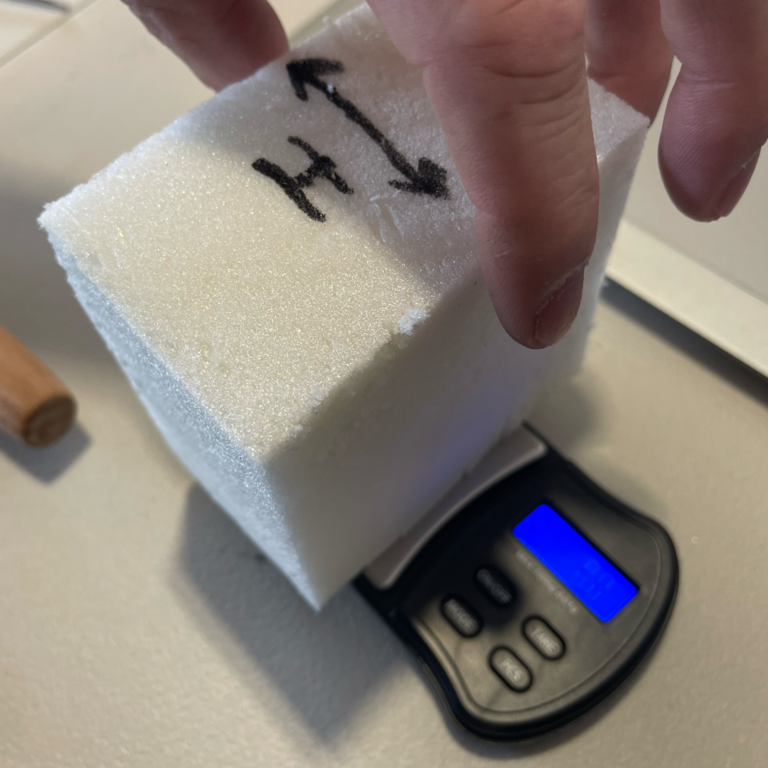
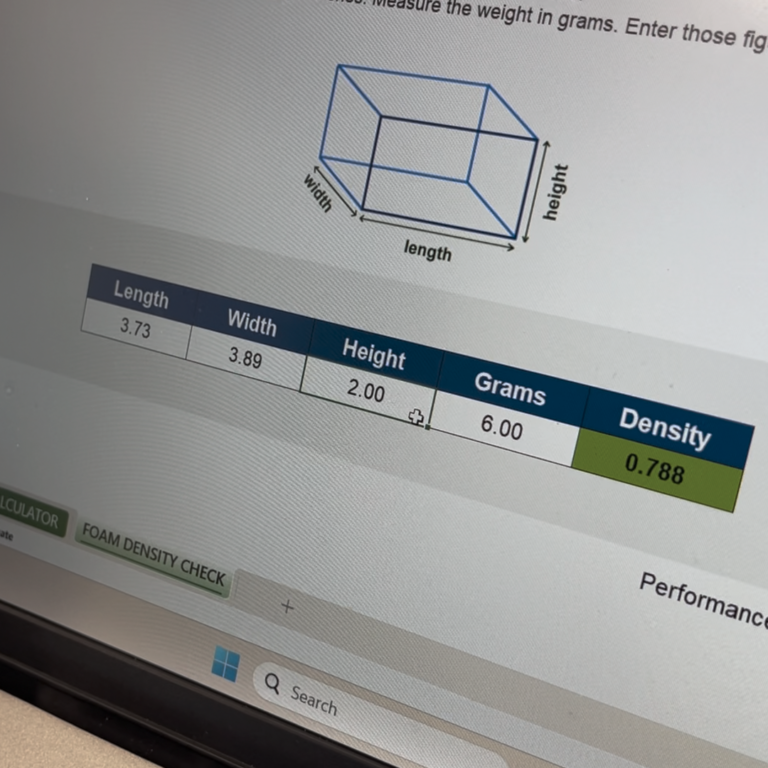
An easy way to measure density is to use this FREE Performance Pro Supply calculator. You will be given your current density simply by entering three measurements taken from a cut block of foam.
Basic tools you will need (you do not need expensive ones):
- Gram scale
- Calipers
- Batt knife
- Sharpie or other marker
- FREE Performance Pro Supply Yield & Density calculator
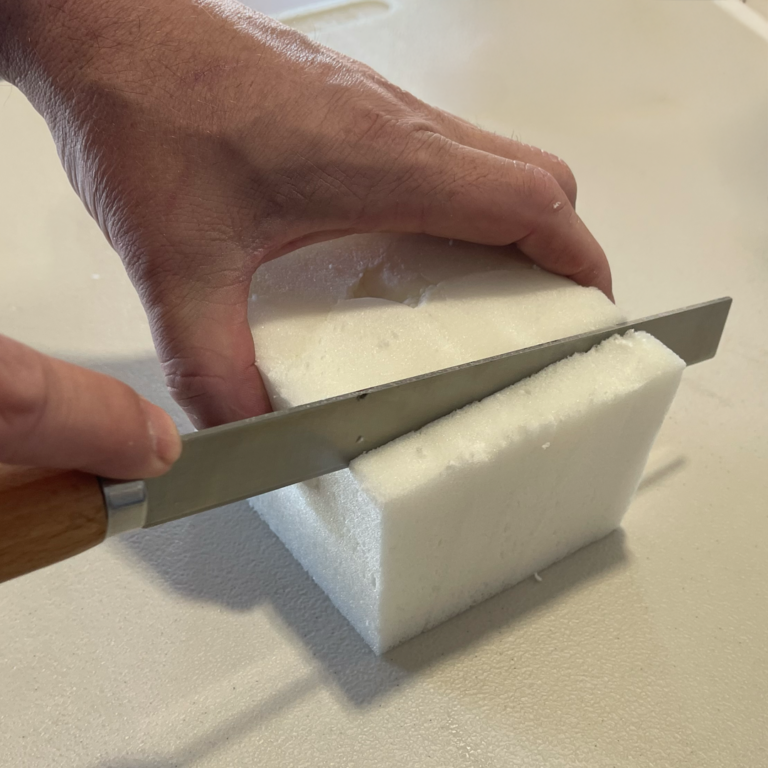
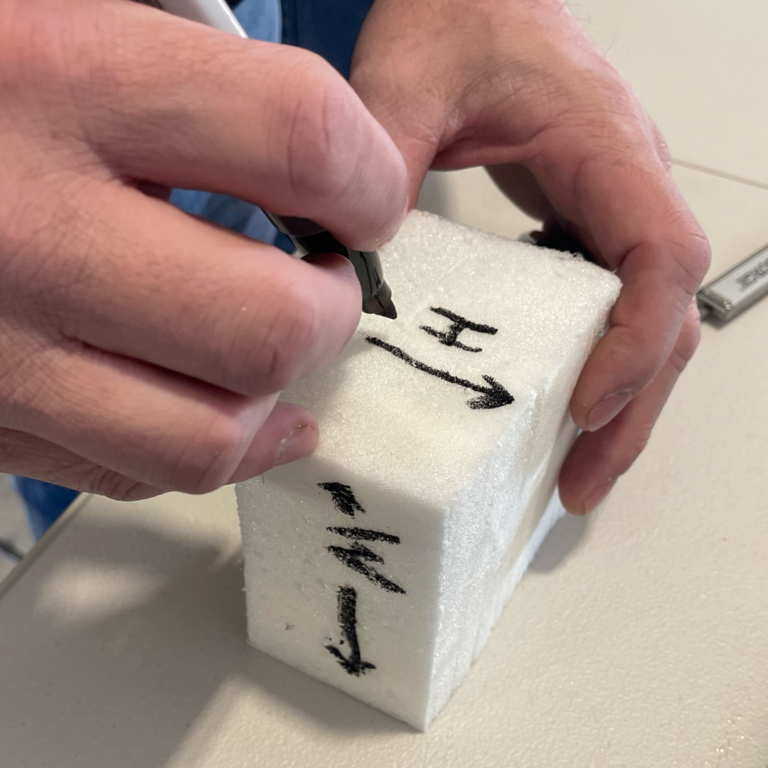
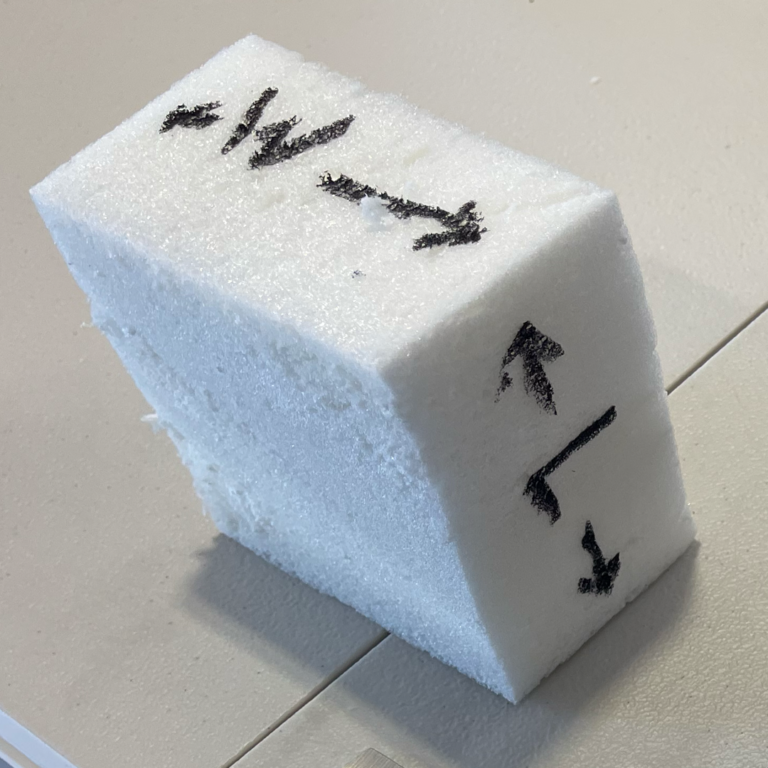
Using the batt knife, cut a sample block from your sprayed foam. Make it as square as you can. Write “Length”, “Width” and “Height” with matching arrows on 3 of the sides of your sample.
Using the digital calipers, measure the length, width, and height. Enter each value into the Performance Pro Supply calculator.
Using the gram scale, weigh the sample block. Enter that information into the calculator.
Once all measurements have been entered, you are given your current spray foam density.
The Real-World Stuff That Affects Yield
This is where experience comes in.
A few examples you’ve probably seen yourself:
- Substrate below 70°F can cut yield 10–15% for every 10-degree drop.
- Every additional pass adds a skin layer and can knock 2–3% off yield.
- Wind above 15 mph can blow away serious material and distort your pattern.
Then there’s material temperature. Cold drums can result in thicker viscosity, cavitation, off-ratio foam, and reduced expansion. Material should be conditioned in the 65–85°F range before spraying. If your material isn’t ready, your system isn’t ready. Period.
How To Measure Spray Foam Yield
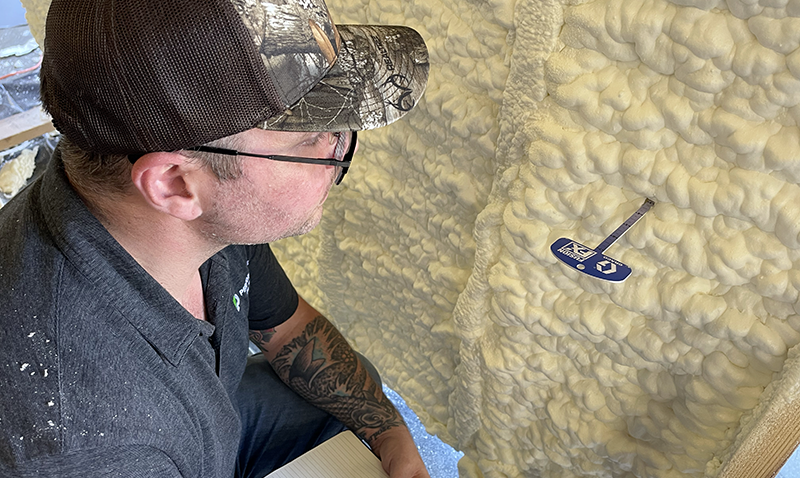
By capturing a few pieces of information, you can estimate foam yields without spraying a full set.
Performance Pro Supply has a FREE spray foam yield calculator to make it easy if you are using a Graco reactor.
Capture the following information:
- Number of square feet sprayed
- Average thickness (use a measuring stick to capture readings at multiple places, then add them together and divide by the number of depth measurements taken)
- Number of cycles used to spray that area
Enter this information into the Performance Pro Supply calculator. The chart will automatically calculate how many board feet you should get out of a full set.
Consistency is where the money is
If you want predictable yield, you have to eliminate variables.
That means:
- Dialing in machine temps in small increments
- Keeping dynamic pressure where it belongs (at least 1000 psi for good mix)
- Maintaining your proportioner and gun
- Watching ratio balance
- Checking thickness, not guessing
Consistency in setup leads to consistency in density. Consistency in density leads to consistent yield. Consistent yield leads to predictable profit. It’s that simple.
Why storage matters more than people think
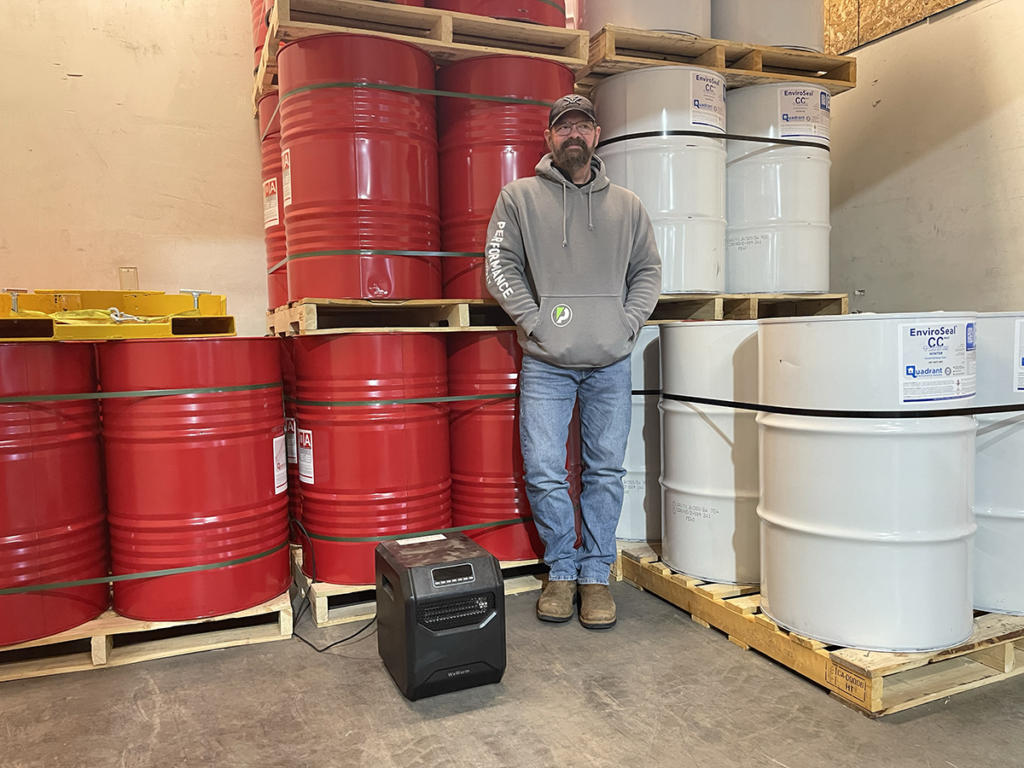
Here’s something that gets overlooked.
You can have your rig dialed in perfectly — but if your material sat in a freezing warehouse or overheated in storage, you’re already behind.
At Performance Pro Supply, all spray foam is stored in temperature-controlled rooms.
So when you pick it up or have it delivered:
- It’s within proper temperature range
- It’s stable
- It’s ready to spray
You’re not burning time trying to warm up cold drums.
You’re not fighting ratio issues caused by storage swings.
You’re starting from a controlled baseline — and that matters.
Summary
Measuring yield and density isn’t paperwork. It’s control. It protects:
- Your margin
- Your estimates
- Your inspection results
- Your reputation
Overspray costs profit. Underspray costs trust. The guys who stay profitable long-term aren’t guessing. They’re measuring, adjusting, and staying consistent. That’s not theory. That’s experience.

About Performance Pro Supply
Performance Pro Supply is an insulation-focused supplier built by installers, for installers. Born from hands-on spray foam professionals, we bring deep, practical experience in spray foam insulation and understand the realities of the jobsite. Since 2019, we’ve proudly served insulation contractors with high-quality products, expert guidance, and dependable support. As members of the Spray Polyurethane Foam Alliance (SPFA), we remain committed to industry standards, best practices, and helping contractors perform at their best on every project.